
Your cart is empty
Start Shopping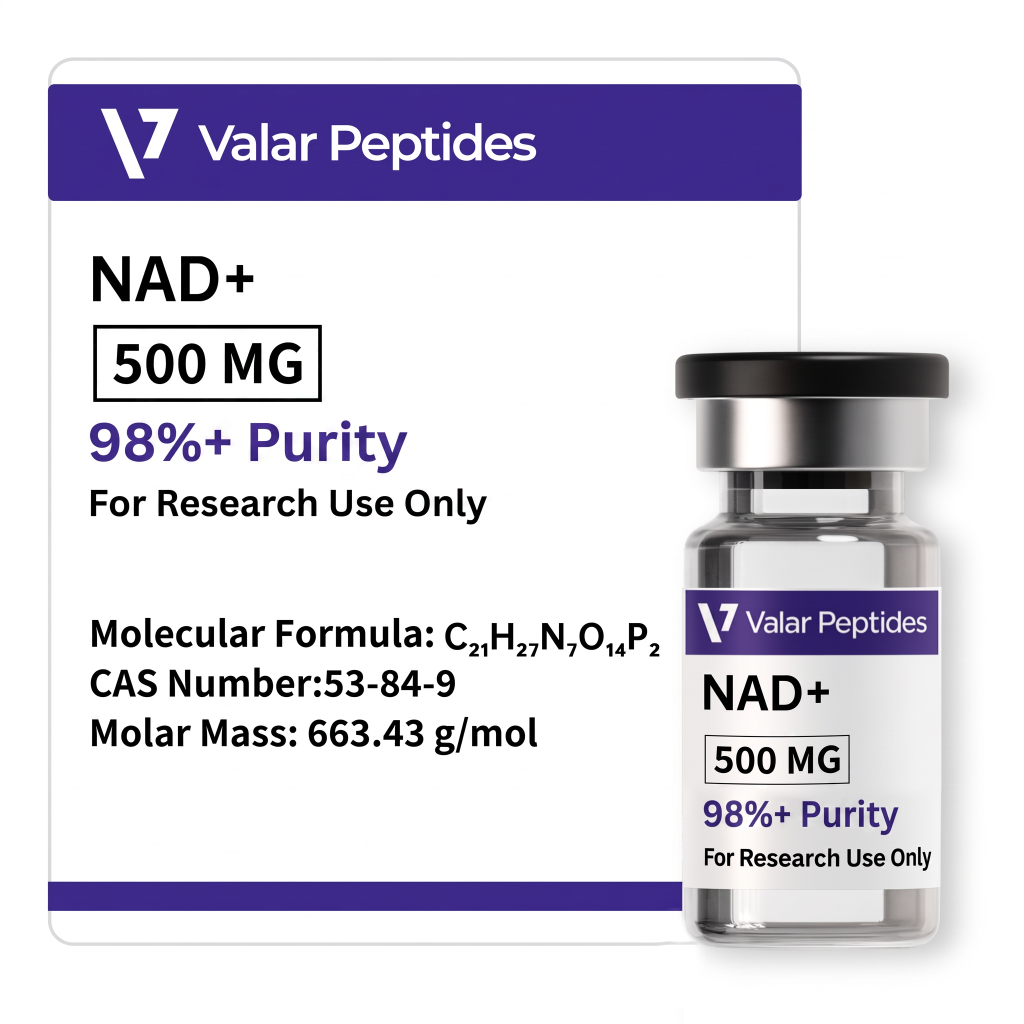
$89
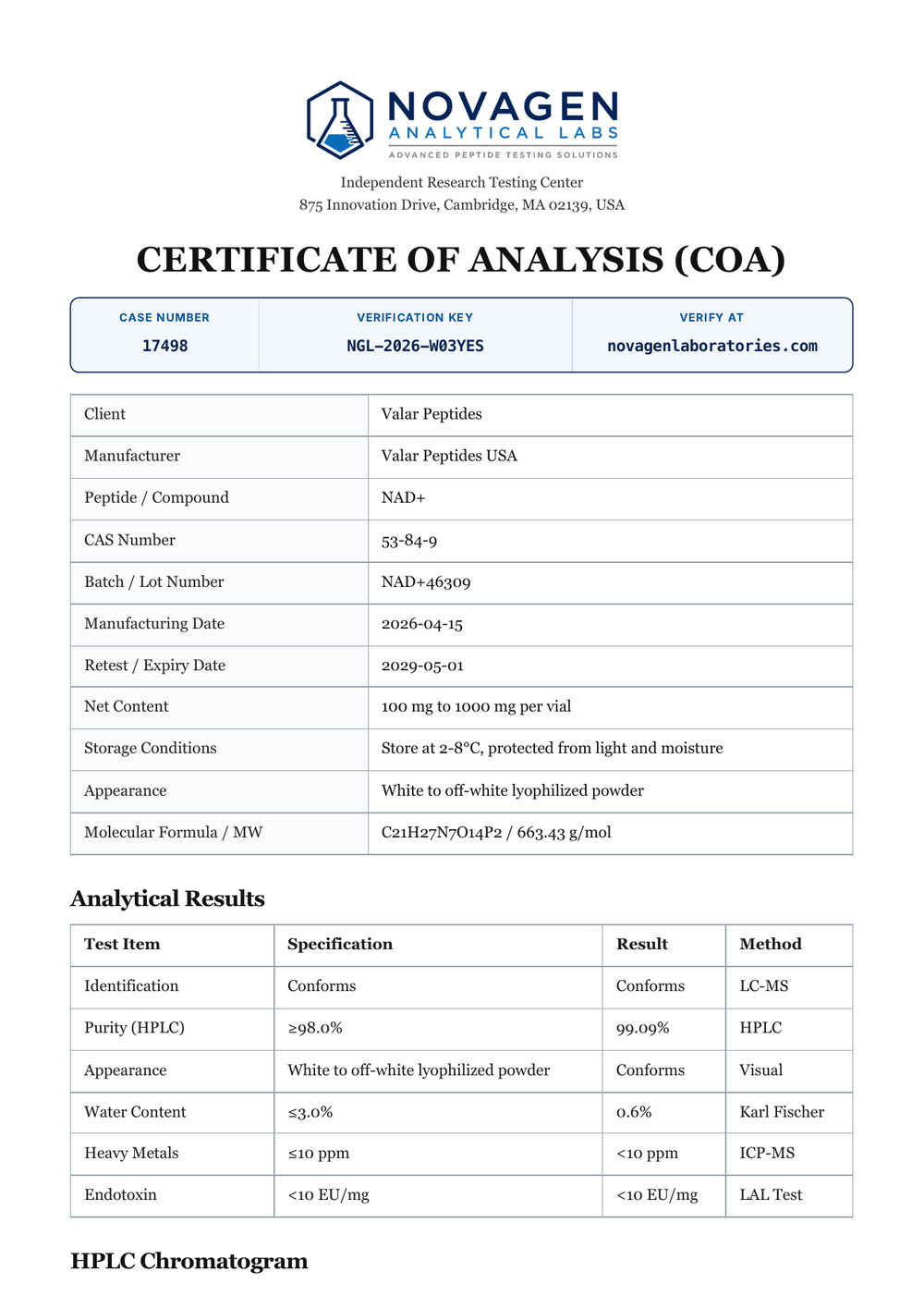
Independently tested by Novagen Analytical Labs
Verify this batch with the lab View the certificate
Every batch we sell carries its own verification key. This one is NGL-2026-W03YES. Enter it on the laboratory's own website and it returns the certificate for this exact batch. That page belongs to the lab, not to us.
NAD+ 500mg (Nicotinamide adenine dinucleotide) is a ubiquitous coenzyme found in all living cells, playing a central and multifaceted role in cellular metabolism, energy production, and various signaling pathways. It exists in two primary forms: oxidized (NAD+) and reduced (NADH). NAD+ acts as an electron acceptor in numerous redox reactions, crucial for generating ATP (cellular energy), while NADH acts as an electron donor.
Beyond its role in energy metabolism, NAD+ is a vital substrate for enzymes involved in DNA repair (PARPs), gene expression regulation (sirtuins), epigenetic modifications, and immune responses. Its levels naturally decline with age and in various disease states, making it a key focus in aging research and for therapeutic interventions.
Each vial contains 500mg of >98% pure NAD+, verified through third-party analytical testing for purity, quantity and endotoxin.
Add $111 more for free US shipping.
This material is sold for laboratory research use only. Terms of sale apply. Not for human consumption, nor medical, veterinary, or household uses. Please familiarize yourself with our Terms & Conditions prior to ordering.
| Title | Range | Discount |
|---|---|---|
| Volume pricing - 10% at 5+, 20% at 10+ | 5 - 9 | 10% |
| Volume pricing - 10% at 5+, 20% at 10+ | 10 + | 20% |
| Molecular Formula | C21H26N7O14P2 |
| CAS Number | 53-84-9 |
| Molar Mass | 663.43 g/mol |
| PubChem CID | 5893 |
| Primary Research Area |
Aging Longevity Metabolism Obesity Insulin Resistance Type 2 Diabetes Neurodegeneration Alzheimer's Disease Parkinson's Disease Mitochondrial Function DNA Repair Genomic Stability Sirtuins PARPs Inflammation Immune Function Cardiovascular Health Heart Failure NAD+ Precursors (NMN, NR) |
| Purity | ≥98% |
| Research Summary | Description |
|---|---|
| A randomized, double-blind, placebo-controlled clinical trial of nicotinamide mononucleotide (NMN) in healthy middle-aged and older adults |
Summary: This 8-week human clinical trial investigated the safety and efficacy of oral nicotinamide mononucleotide (NMN), a direct NAD+ precursor, in healthy middle-aged and older adults. Participants were randomized to receive either 300 mg/day of NMN or a placebo. The study found that NMN supplementation significantly increased whole blood NAD+ levels and improved various biomarkers, including increased walking endurance (a measure of physical performance), improved sleep quality, and reductions in certain inflammatory markers. Importantly, no serious adverse events were reported. Citation: Kim, M., Seol, J., Chung, H., Kim, D., Han, S., Lee, C., & Kim, D. (2022). A randomized, double-blind, placebo-controlled clinical trial of nicotinamide mononucleotide (NMN) in healthy middle-aged and older adults. Journal of Functional Foods, 95, 105151. |
| NAD+ and its therapeutic potential in metabolic disorders |
Summary: This comprehensive review details the crucial role of NAD+ in various metabolic pathways and discusses its extensive therapeutic potential for metabolic disorders. It highlights how declining NAD+ levels, often associated with aging and obesity, contribute to metabolic dysfunction, including insulin resistance, obesity, and non-alcoholic fatty liver disease. The review summarizes compelling preclinical evidence demonstrating that boosting NAD+ levels through precursors like nicotinamide riboside (NR) and NMN can effectively ameliorate these metabolic abnormalities by enhancing mitochondrial function, improving insulin signaling, and reducing systemic and cellular inflammation. Citation: Yoshino, J., Yoshino, M., & Imai, S. I. (2021). NAD+ and its therapeutic potential in metabolic disorders. Endocrine Reviews, 42(6), 920–941. |
| NAD+ in brain aging and neurodegenerative disorders |
Summary: This comprehensive review article explores the pivotal role of NAD+ in brain aging and various neurodegenerative disorders, such as Alzheimer's, Parkinson's, and Huntington's diseases. It discusses how NAD+ depletion is a common and often exacerbating feature in these conditions. The article meticulously explains that NAD+ is crucial for maintaining neuronal bioenergetics, ensuring genomic stability, and facilitating adaptive stress responses. It also highlights that NAD+-dependent enzymes (specifically sirtuins and PARPs) are vital for proper neuronal function and survival. The review synthesizes a growing body of evidence suggesting that therapeutic strategies aimed at bolstering cellular NAD+ levels could offer significant neuroprotective and potentially neurorestorative benefits. Citation: Lautrup, S., Sinclair, D. A., & Fang, E. F. (2019). NAD+ in brain aging and neurodegenerative disorders. Cellular and Molecular Life Sciences, 76(22), 4381–4405. |
| NAD+ in DNA repair and mitochondrial maintenance |
Summary: This detailed review article elucidates the indispensable roles of NAD+ in maintaining genomic stability and ensuring optimal mitochondrial health, both of which are critical processes for cellular longevity and preventing age-related diseases. It highlights how NAD+-dependent enzymes, particularly poly(ADP-ribose) polymerases (PARPs) and sirtuins, are central to the various DNA repair pathways. The authors explain that DNA damage can rapidly consume cellular NAD+, and that chronic depletion of NAD+ can severely impair these crucial repair mechanisms. The review also thoroughly discusses how NAD+ is absolutely essential for mitochondrial oxidative phosphorylation (the primary means of ATP production) and how the NAD+/SIRT1 axis is crucial for maintaining mitochondrial quality control, including promoting mitophagy (the selective removal of damaged or defective mitochondria). Citation: Fang, E. F., Kassahun, H., Croteau, D. L., & Bohr, V. A. (2017). NAD+ in DNA repair and mitochondrial maintenance. Free Radical Biology and Medicine, 106, 327–333. |
| The effects of nicotinamide adenine dinucleotide in cardiovascular diseases: Molecular mechanisms, roles and therapeutic potential |
Summary: This comprehensive review focuses on the involvement of NAD+ in cardiovascular diseases (CVDs) and explores its therapeutic potential. It highlights that NAD+ acts as a pivotal co-substrate for numerous enzymes involved in various signaling pathways activated in CVDs. The review synthesizes emerging evidence demonstrating that NAD+ can exert significant ameliorating effects on CVDs by regulating fundamental processes such as metabolism, maintaining cellular redox homeostasis, and modulating immune and inflammatory responses. Furthermore, it discusses how NAD+ might contribute to delaying aging through its influence on sirtuin and non-sirtuin pathways, thereby contributing to interventions for age-related CVDs. Citation: Wang, Y., Lu, Y., Zhu, X. G., & Li, T. (2022). The effects of nicotinamide adenine dinucleotide in cardiovascular diseases: Molecular mechanisms, roles and therapeutic potential. Frontiers in Cardiovascular Medicine, 9, 901502. |
Summary: This 8-week human clinical trial investigated the safety and efficacy of oral nicotinamide mononucleotide (NMN), a direct NAD+ precursor, in healthy middle-aged and older adults. Participants were randomized to receive either 300 mg/day of NMN or a placebo. The study found that NMN supplementation significantly increased whole blood NAD+ levels and improved various biomarkers, including increased walking endurance (a measure of physical performance), improved sleep quality, and reductions in certain inflammatory markers. Importantly, no serious adverse events were reported.
Citation:
Kim, M., Seol, J., Chung, H., Kim, D., Han, S., Lee, C., & Kim, D. (2022). A randomized, double-blind, placebo-controlled clinical trial of nicotinamide mononucleotide (NMN) in healthy middle-aged and older adults. Journal of Functional Foods, 95, 105151.
Summary: This comprehensive review details the crucial role of NAD+ in various metabolic pathways and discusses its extensive therapeutic potential for metabolic disorders. It highlights how declining NAD+ levels, often associated with aging and obesity, contribute to metabolic dysfunction, including insulin resistance, obesity, and non-alcoholic fatty liver disease. The review summarizes compelling preclinical evidence demonstrating that boosting NAD+ levels through precursors like nicotinamide riboside (NR) and NMN can effectively ameliorate these metabolic abnormalities by enhancing mitochondrial function, improving insulin signaling, and reducing systemic and cellular inflammation.
Citation:
Yoshino, J., Yoshino, M., & Imai, S. I. (2021). NAD+ and its therapeutic potential in metabolic disorders. Endocrine Reviews, 42(6), 920–941.
Summary: This comprehensive review article explores the pivotal role of NAD+ in brain aging and various neurodegenerative disorders, such as Alzheimer's, Parkinson's, and Huntington's diseases. It discusses how NAD+ depletion is a common and often exacerbating feature in these conditions. The article meticulously explains that NAD+ is crucial for maintaining neuronal bioenergetics, ensuring genomic stability, and facilitating adaptive stress responses. It also highlights that NAD+-dependent enzymes (specifically sirtuins and PARPs) are vital for proper neuronal function and survival. The review synthesizes a growing body of evidence suggesting that therapeutic strategies aimed at bolstering cellular NAD+ levels could offer significant neuroprotective and potentially neurorestorative benefits.
Citation:
Lautrup, S., Sinclair, D. A., & Fang, E. F. (2019). NAD+ in brain aging and neurodegenerative disorders. Cellular and Molecular Life Sciences, 76(22), 4381–4405.
Summary: This detailed review article elucidates the indispensable roles of NAD+ in maintaining genomic stability and ensuring optimal mitochondrial health, both of which are critical processes for cellular longevity and preventing age-related diseases. It highlights how NAD+-dependent enzymes, particularly poly(ADP-ribose) polymerases (PARPs) and sirtuins, are central to the various DNA repair pathways. The authors explain that DNA damage can rapidly consume cellular NAD+, and that chronic depletion of NAD+ can severely impair these crucial repair mechanisms. The review also thoroughly discusses how NAD+ is absolutely essential for mitochondrial oxidative phosphorylation (the primary means of ATP production) and how the NAD+/SIRT1 axis is crucial for maintaining mitochondrial quality control, including promoting mitophagy (the selective removal of damaged or defective mitochondria).
Citation:
Fang, E. F., Kassahun, H., Croteau, D. L., & Bohr, V. A. (2017). NAD+ in DNA repair and mitochondrial maintenance. Free Radical Biology and Medicine, 106, 327–333.
Summary: This comprehensive review focuses on the involvement of NAD+ in cardiovascular diseases (CVDs) and explores its therapeutic potential. It highlights that NAD+ acts as a pivotal co-substrate for numerous enzymes involved in various signaling pathways activated in CVDs. The review synthesizes emerging evidence demonstrating that NAD+ can exert significant ameliorating effects on CVDs by regulating fundamental processes such as metabolism, maintaining cellular redox homeostasis, and modulating immune and inflammatory responses. Furthermore, it discusses how NAD+ might contribute to delaying aging through its influence on sirtuin and non-sirtuin pathways, thereby contributing to interventions for age-related CVDs.
Citation:
Wang, Y., Lu, Y., Zhu, X. G., & Li, T. (2022). The effects of nicotinamide adenine dinucleotide in cardiovascular diseases: Molecular mechanisms, roles and therapeutic potential. Frontiers in Cardiovascular Medicine, 9, 901502.
Your cart is empty
Start Shopping